
Technology has transformed the way we teach, but it hasn’t replaced the value of learning on paper. Research shows that handwriting and interacting with printed pages help students think more deeply, retain information longer, and stay engaged.
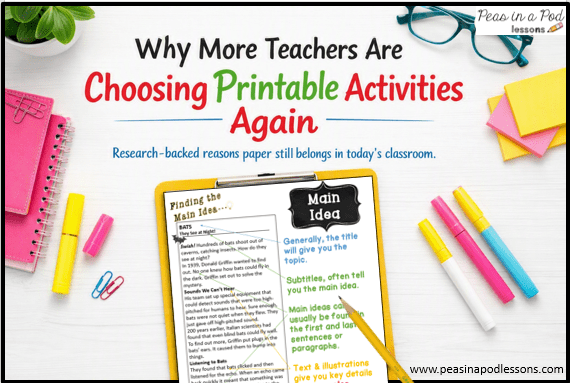
Technology has transformed the way we teach, but it hasn’t replaced the value of learning on paper. Research shows that handwriting and interacting with printed pages help students think more deeply, retain information longer, and stay engaged.
The night before my first year of teaching, I was still sitting on my living room floor at 11:30 p.m., surrounded by construction paper, laminating pouches, and a pile of back to school activities I was convinced I had to have ready before my students walked through the door.
I remember looking around and thinking,
“How am I supposed to keep this up all year?”
The truth?
I wasn’t.
And I learned that lesson the hard way.

When a child is diagnosed with dyslexia, it can spark a whirlwind of emotions for both parents and teachers—concern, confusion, and the deep desire to help. But amidst the flood of specialists, programs, and pricey “brain training” promises, how do you know what really works?

Lesson planning is always a bit tricky. Coming up with lesson plans for the first week of school can feel even trickier! How much time should we spend teaching procedures? How can we get to know our new students? What can we do to make the first week fun? When should we start with the curriculum?

When it comes to teaching grammar, the struggle is real. You might think, ‘I know some ways to teach grammar, but what’s the best way?” This thought aligns with research showing that disconnected grammar lessons often lead to disengagement and minimal impact on student writing. So, let’s dive into a game-changing five-step approach that turns grammar into an exciting and purposeful journey for both teachers and students.

Decorations are going up everywhere, and Halloween is just around the corner! This is my favorite time of year because the weather is changing, and the students are always so excited! Why not fuel their excitement with some fun Halloween books? Here are some of my favorite Halloween books and a few tips about how they can be used in the classroom.

October is the perfect time to inject some creativity and fun into your classroom activities. This year, why not try something a little different and host a “Dress Up with Idioms” day? It’s a fantastic way to teach your students about idioms while letting their imaginations run wild.

If you’re searching for Constitution Day activities suitable for your elementary students, you’ve landed in the perfect spot!

Are you tired of your students only having a vague understanding of the main idea? You’re not alone! You might need some new strategies to help students find the main idea. Many people struggle with identifying the central point of a text, especially when it’s buried under layers of information. But fear not, because there are proven teaching strategies that can help your students unlock the key to understanding any text. Below we explore five of these strategies that will aid students finding the main idea, whether it’s a news article, a research paper, or a novel. From scanning for key phrases to analyzing the structure of the text, we can teach students to approach any reading material with confidence and clarity. Let’s dive in and start unlocking the mysteries of text comprehension!

Mother’s Day is around the corner, and you might be looking for a Mother’s Day craft that’s both sentimental and affordable. Look no further than a handwriting keychain! This personalized gift is simple, quick, and can be made inexpensively with white printable shrink paper.

Differentiation for some educators, conjures visions creating different lessons for every student in the room and long nights of planning and grading. That insanity is not what differentiation is all about. Differentiating instruction is really a way of thinking – not a preplanned list of strategies. Often times, it’s making plans in the moment. It’s recognizing that fair does not always mean equal and that all of our students bring different gifts and challenges. As teachers, we need to recognize those gifts and challenges while we flexibly differentiate instruction.

Are your students missing out on important information because they don’t know how to use nonfiction text features? Don’t worry, we’ve got you covered! We’ll show you five fun and effective ways to practice nonfiction text features with your students.

Are you looking for ways to teach your students reading comprehension strategies that actually stick? Constructed response questions can be intimidating, but with the RACE strategy for writing and reading comprehension, your students will be using text evidence to answer questions in no time!

Are you looking for better strategies for classroom behavior management? Have you found yourself thinking: “What do I do for that student that continually chooses to misbehave? I have tried everything, but nothing has worked. I feel like I argue and nag all day and I know there must be a better way.”

Here are 5 tips for curbing extreme student behavior: when NOTHING else seems to work:
Continue readingAre you looking for a fun and engaging way to teach your students strategies for finding the main idea and details in a text? Look no further. In this post, we present an awesome main idea and details anchor chart, as well as reading comprehension passages that will make your lesson a hit!

Let’s talk about teaching inference in upper elementary. We all know that it’s a crucial reading skill, but did you know that we can continue to develop and refine it with our students every year? Whether you’re teaching third or fifth grade, I’ve got some tips and tricks that will help your students go deeper than the surface level when reading. We will break teaching inferences down into three steps.

Are you struggling with getting your elementary students to follow directions? You’re not alone! It’s a common classroom management issue that many teachers face. But, with these five quick and easy tricks, you can get your class back on track and following directions the first time.
